

Nvidia is expanding beyond its dominance in AI data-center chips and making its boldest move yet into the personal computer market, unveiling its first Arm-based CPU designed for consumers as the company aims to reshape the future of AI-powered PCs.
Speaking at Computex 2026 in Taipei, Nvidia CEO Jensen Huang introduced the RTX Spark superchip, a new processor platform developed in partnership with Microsoft that combines Nvidia's Blackwell GPU architecture with a custom Arm-based N1X CPU designed alongside MediaTek. The new chips will power a fresh generation of Windows PCs from Microsoft, Dell, HP, Asus, Lenovo, and MSI starting this fall.
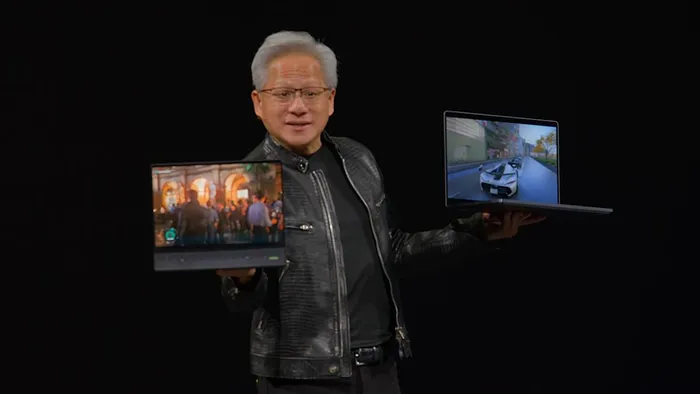
Huang described the launch as a pivotal moment for the computing industry.
"This reinvention of the computer is as big of a deal as the reinvention of the phone into what we now know as the smartphone," Huang said. "Microsoft and Nvidia are going to reinvent the PC."
The RTX Spark marks Nvidia's first major push into the CPU market for personal computers, an arena historically dominated by Intel and AMD, while also challenging Qualcomm and Apple in the rapidly growing Arm-based computing ecosystem.
Built on TSMC's advanced 3-nanometer process, the RTX Spark features a 20-core Grace CPU paired with a Blackwell RTX GPU containing 6,144 CUDA cores and fifth-generation Tensor Cores. The chip includes up to 128GB of LPDDR5X unified memory and is designed to deliver workstation-class AI performance in ultra-thin laptops and compact desktop systems.
Nvidia plans to launch more than 30 laptop models and 10 desktop systems powered by RTX Spark over time. The first devices will target AI developers, creators, and gamers, featuring premium designs as thin as 14 millimeters while delivering performance roughly equivalent to Nvidia's RTX 5070 laptop GPU.
A key concern surrounding Arm-based Windows PCs has long been software compatibility. Nvidia sought to address those fears directly, with Huang claiming RTX Spark devices will run virtually every Windows application and game.
"Every single application that Windows has ever run," Huang said, emphasizing Nvidia's confidence in the platform's compatibility.
The breakthrough is made possible through Microsoft's continued optimization of Windows on Arm, including enhancements to its Prism emulation layer, DirectX 12, Windows ML, and advanced workload scheduling technologies developed specifically for RTX Spark. Microsoft also confirmed that RTX Spark systems will join the Copilot+ PC category, combining powerful GPUs and dedicated AI processors to support next-generation AI workloads locally.
One of the first products announced is Microsoft's Surface Laptop Ultra, a premium 15-inch notebook expected to launch later this year.
The launch reflects Nvidia's broader strategy to expand its influence beyond data centers and into every layer of AI computing. While GPUs remain the backbone of AI training, Nvidia increasingly sees CPUs as a critical component for agentic AI systems that require massive amounts of general-purpose computing alongside accelerated workloads.
Earlier this year, Nvidia unveiled Vera, its first custom CPU for AI data centers. Huang confirmed at Computex that Vera has entered full production, with customers including OpenAI, Anthropic, xAI, Oracle, Dell, and CoreWeave.
According to Nvidia, Vera can generate AI tokens up to 1.8 times faster than traditional x86 processors, helping AI factories increase throughput and improve efficiency.
"This is going to be our new major growth driver," Huang said.
The move signals Nvidia's ambition to replicate in the PC market what it has already achieved in AI data centers. As the industry transitions toward AI-native computing, Nvidia is betting that the future of personal computers will be powered not by traditional x86 processors but by tightly integrated Arm CPUs, powerful GPUs, and dedicated AI accelerators working together on a single platform.