

The U.S. labor market delivered another upside surprise in May, as job growth more than doubled Wall Street expectations and reinforced the view that the economy remains resilient despite elevated rates.
According to the Bureau of Labor Statistics, nonfarm payrolls increased by 172,000 in May, comfortably exceeding consensus estimates of 80,000 jobs. The gain followed an upwardly revised increase of 179,000 jobs in April.
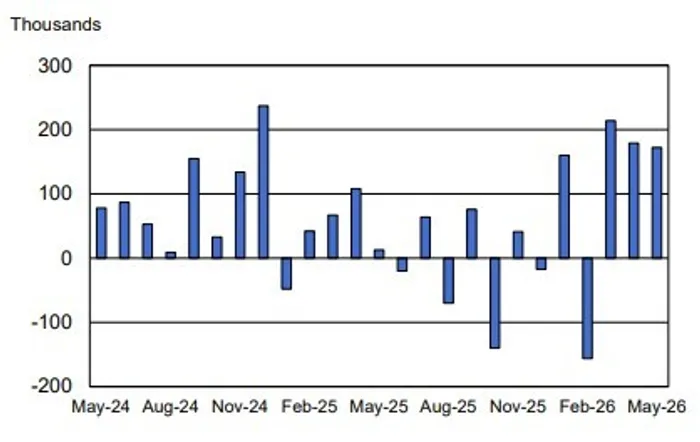
Meanwhile, the unemployment rate remained unchanged at 4.3%, extending a remarkably stable trend that has kept unemployment between 4.3% and 4.5% since July 2025. The total number of unemployed Americans was little changed at 7.3 million.
The stronger-than-expected report suggests employers continue to retain workers despite ongoing concerns about slowing growth, artificial intelligence-driven workforce disruption, and higher borrowing costs.
Job creation was led by leisure and hospitality, which added 70,000 positions, significantly above its average monthly gain over the past year. Food services and drinking establishments accounted for 48,000 of those new jobs.
Local government employment rose by 55,000, while health care added another 35,000 jobs, continuing one of the labor market's most consistent growth trends. Social assistance employment also increased by 12,000 positions.
Offsetting some of the strength, financial activities lost 22,000 jobs during the month and have shed 107,000 jobs since peaking in May 2025. Transportation and warehousing employment remained largely unchanged but has declined by 92,000 jobs since February 2025.
Wage growth remained moderate. Average hourly earnings increased by 12 cents, or 0.3%, to $37.53. On an annual basis, wages rose 3.4%, suggesting labor market strength has yet to trigger a meaningful reacceleration in wage inflation.
Other labor market indicators were similarly stable. The labor force participation rate held at 61.8%, while the employment-population ratio remained at 59.2%. The number of Americans working part-time for economic reasons was unchanged at 4.8 million.
For financial markets, the report may further complicate the Federal Reserve's policy outlook.
Federal Reserve officials have increasingly shifted their focus from labor market weakness toward inflation risks, with policymakers emphasizing a wait-and-see approach after cutting rates by 75 basis points during late 2025. The stronger labor market data is likely to reinforce concerns that inflation could remain sticky if economic activity continues to outperform expectations.
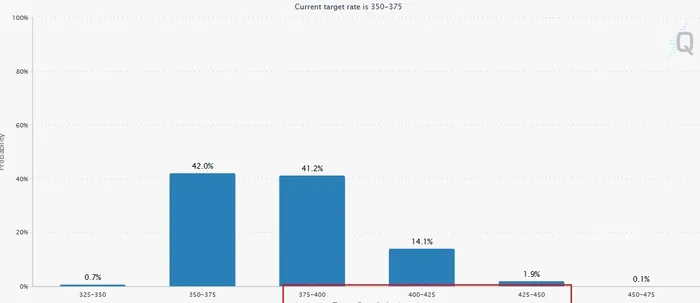
Following the report, traders increased bets that the Fed could be forced to tighten policy again before the end of the year. Market pricing now reflects a 41% probability of a 25-basis-point rate hike by December, while the odds of a larger 50-basis-point increase stand near 14%.
The labor market's resilience also aligns with broader economic strength. U.S. GDP expanded at a 1.6% annualized pace during the first quarter, while the Atlanta Fed's GDPNow model is currently tracking second-quarter growth near 3%.
For now, the latest employment data suggests the U.S. economy remains far from recession territory. Instead, investors may increasingly face a different challenge: an economy that remains strong enough to keep inflation pressures alive and force the Federal Reserve to maintain a restrictive policy stance for longer than markets had anticipated.